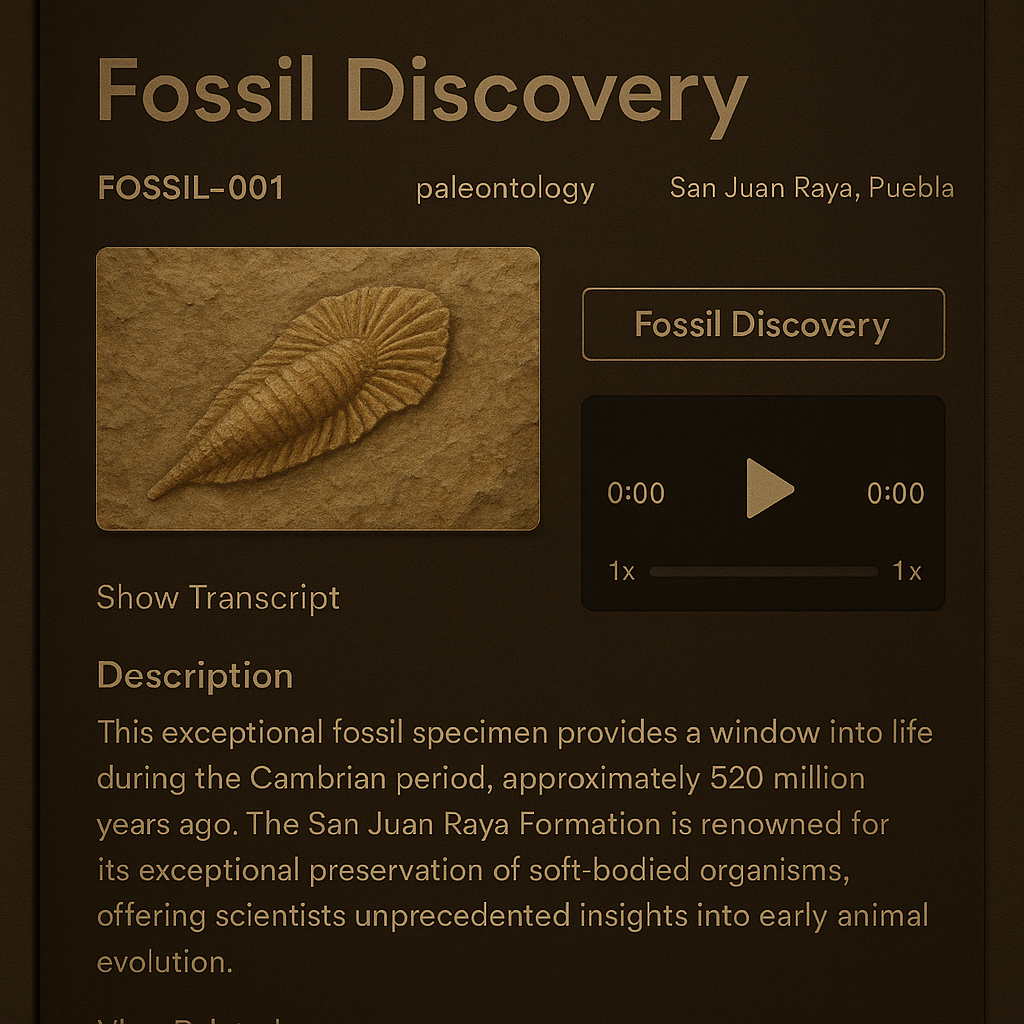
Dinosaur Footprints in San Juan Raya, Puebla
A paleontological treasure of Mexico
1. Exact Location
The footprints are found near the town of San Juan Raya, within the Tehuacán-Cuicatlán Biosphere Reserve. This semi-desert area is rich in fossils and geological formations.
2. Types of Footprints Found
At least three types of dinosaur tracks have been identified:
- Theropods: Bipedal, carnivorous dinosaurs. Tridactyl (three-toed) prints with claw marks. Sizes range from 15–50 cm long. Possibly from dinosaurs similar to Allosaurus or Carcharodontosaurus.
- Sauropods: Large, long-necked herbivores. Rounded, enormous prints, indicating animals weighing several tons. Suggest possible herd movement.
- Ornithopods: Bipedal or quadrupedal herbivores, such as iguanodonts. Prints are intermediate in shape, sometimes with shorter, wider toes.
3. Geological Age
The sedimentary layers with the tracks are 95–113 million years old (Early to Middle Cretaceous). Tracks are preserved in limestones and shales that were once muddy plains or lake/marine shores.
4. Geological Formation
Part of the San Juan Raya Formation, a sequence of marine and continental Cretaceous rocks. Indicates a coastal or deltaic ecosystem, ideal for preserving footprints.
5. State of Preservation
Many tracks are well-preserved, visible outdoors on sloping rock slabs. Some show details like pads and claws.
6. Scientific and Educational Value
These tracks help us understand dinosaur movement, environment, and whether they traveled alone or in groups. Studies have been proposed on stride length, estimated speed, and gregarious behavior.
7. Access and Tourism
San Juan Raya has a community museum and trained local guides who lead visitors along the trackways. It’s an excellent blend of science, ecotourism, and local culture.
Related Discovery:
Recent research has found matching dinosaur footprints on opposite sides of the Atlantic, showing how dinosaurs once roamed freely between Africa and South America before the continents split.
Read more here (GeologyPage, 2024)